
Frida Kahlo Would Have Hated Being an Icon: How rebellion became a brand aesthetic
There is a particular irony in the way Frida Kahlo exists in the world today. Her face, crowned with flowers, and her iconic brows, stares out from tote bags, T-shirts, mugs, and phone cases. She has become a symbol and an aesthetic. But to reduce her to an icon is to misunderstand the very core of who she was. Frida Kahlo did not paint to be admired. She painted to survive.
Her life was marked by pain from the very beginning. At six years old, she was diagnosed with polio, which left one of her legs thinner than the other and made her the target of childhood cruelty. But the defining trauma came later, at the age of eighteen, when a bus accident shattered her body. Her spine, pelvis, ribs were broken. A metal handrail pierced her abdomen. Doctors doubted she would live. If she did, they warned, her life would be irrevocably altered.
It was during her long, immobilizing recovery that painting entered her life. Initially not as a career, but as a necessity. Lying in bed, encased in plaster, she began to paint self-portraits using a mirror installed above her. “I paint myself because I am so often alone,” she once said, “because I am the subject I know best.” But these were not portraits in the traditional sense. They were confessions.
Her paintings are often described as surreal, though she rejected the label. “I never painted dreams,” she insisted. “I painted my own reality.” And her reality was one of relentless physical suffering and emotional turmoil. Her works are filled with symbolism: bleeding hearts, exposed spines, fractured bodies, and haunting gazes that confront the viewer without apology. In The Broken Column, her upper body is split open, revealing a crumbling ionic column in place of her spine, nails piercing her skin. It is not a metaphor softened for comfort. It is her pain made visible.
But her suffering was not only physical. Her chaotic relationship with Diego Rivera added another layer of emotional intensity to her work. Their marriage was passionate and marked by infidelity on both sides. When Rivera had an affair with Kahlo’s own sister, the betrayal cut deeply, and her paintings from this period reflect a raw, unfiltered pain. In The Two Fridas, she depicts herself as split in two, one heart intact, the other severed and bleeding. Identity, love, and loss collapse into a single image.
Kahlo’s art was never about pleasing an audience. It was about the truth. Her truth. She painted miscarriages, surgeries, disability, heartbreak, and identity in ways that were deeply personal yet resonant. Her work challenged conventions of beauty, femininity, and even nationalism. She embraced her Mexican heritage, often incorporating traditional dress and indigenous symbolism into both her art and her appearance. Not as a costume, but as political and cultural assertion.
And yet, today, that same image has been flattened into a marketable aesthetic.
Walk into almost any art store or browse online marketplaces, and you will find her face reproduced endlessly. Bright colors, floral crowns, stylized brows, which is often detached entirely from the context of her life and work. The pain is gone. The politics are gone. What remains is a curated version of Frida: bold, exotic and empowering, but simplified.
Kahlo was fiercely individualistic and openly critical of societal norms. She resisted categorization, rejected passive femininity, and lived unapologetically in defiance of expectations. It is difficult to imagine her embracing a world where her image is mass-produced and sold, often without any engagement with her story. The commercialization of her identity feels, in many ways, like a contradiction of everything she stood for.
There is also a deeper issue at play: recognition without understanding.
Many people can identify Frida Kahlo by her image alone, but far fewer can speak about her work in detail, or the experiences that shaped it. Her unibrow has become more famous than her paintings. Her aesthetic is celebrated, while her suffering is often sanitized or ignored.
This does not mean that visibility is inherently negative. Kahlo’s prominence has introduced her to new audiences and allowed her story to reach across generations and cultures. For many, she represents resilience, self-expression, and strength in the face of adversity. These are not trivial associations. But they are incomplete.
To truly engage with Frida Kahlo is to confront discomfort. Her work does not offer easy inspiration. It demands attention, empathy, and reflection. It asks us to consider the realities of chronic pain, disability, emotional trauma, and identity in ways that are often unsettling. It resists consumption.
And perhaps that is the tension at the heart of her modern legacy. We live in a culture that turns everything into something digestible, something sellable. Kahlo, however, created art that was anything but digestible. It was raw, intimate, and, at times, deeply unsettling. To transform that into a decorative motif is to strip it of its power.
So would Frida Kahlo have hated being an icon? Not necessarily the recognition, but the simplification, the commodification, the loss of meaning. Almost certainly.
Because she never set out to be admired from a distance. She wanted to be understood.
And understanding her requires more than wearing her image. It requires looking at what she painted, and why. It requires sitting with the discomfort of her reality, rather than smoothing it into something easily digestible.
In a world full of Frida Kahlo merchandise, perhaps the most radical act is to return to her work itself. Not as decoration, but as testimony.
by Alicia Fischer 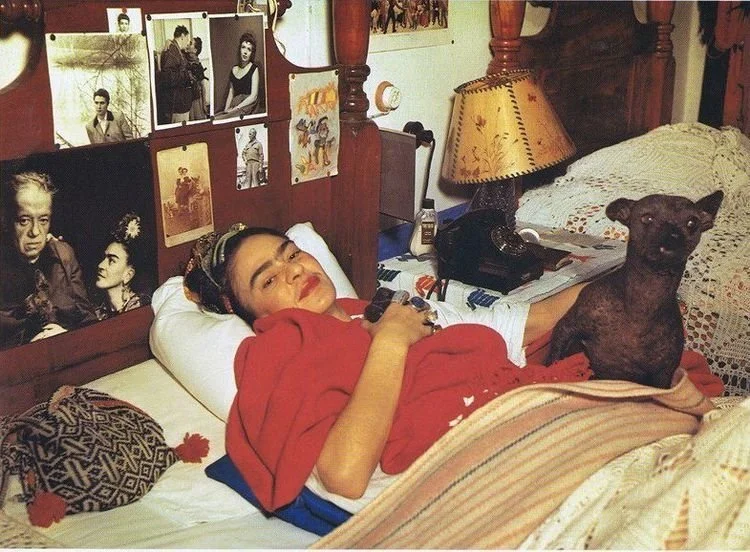
PHOTOGRAPHY BY Nickolas Muray ( minniemuse.com)