
On Being Seen: Caro Schaeffler Talks Courage, Imposter Syndrome & Creating Honestly
Caro Schaeffler has moved through two worlds that are as seductive as they are unforgiving: the fashion industry that taught her to embody others’ visions, and the music scene that finally gave her space for her own. In her conversation with AFFECT Magazine, she speaks about pressure, boundary-crossing, and being underestimated, yet also about the empowerment that comes from reclaiming her narrative. AFFECT explored how she transforms personal emotion into art, why she refuses to trade her morals for opportunity, and what still must change for women to thrive freely in creative fields.
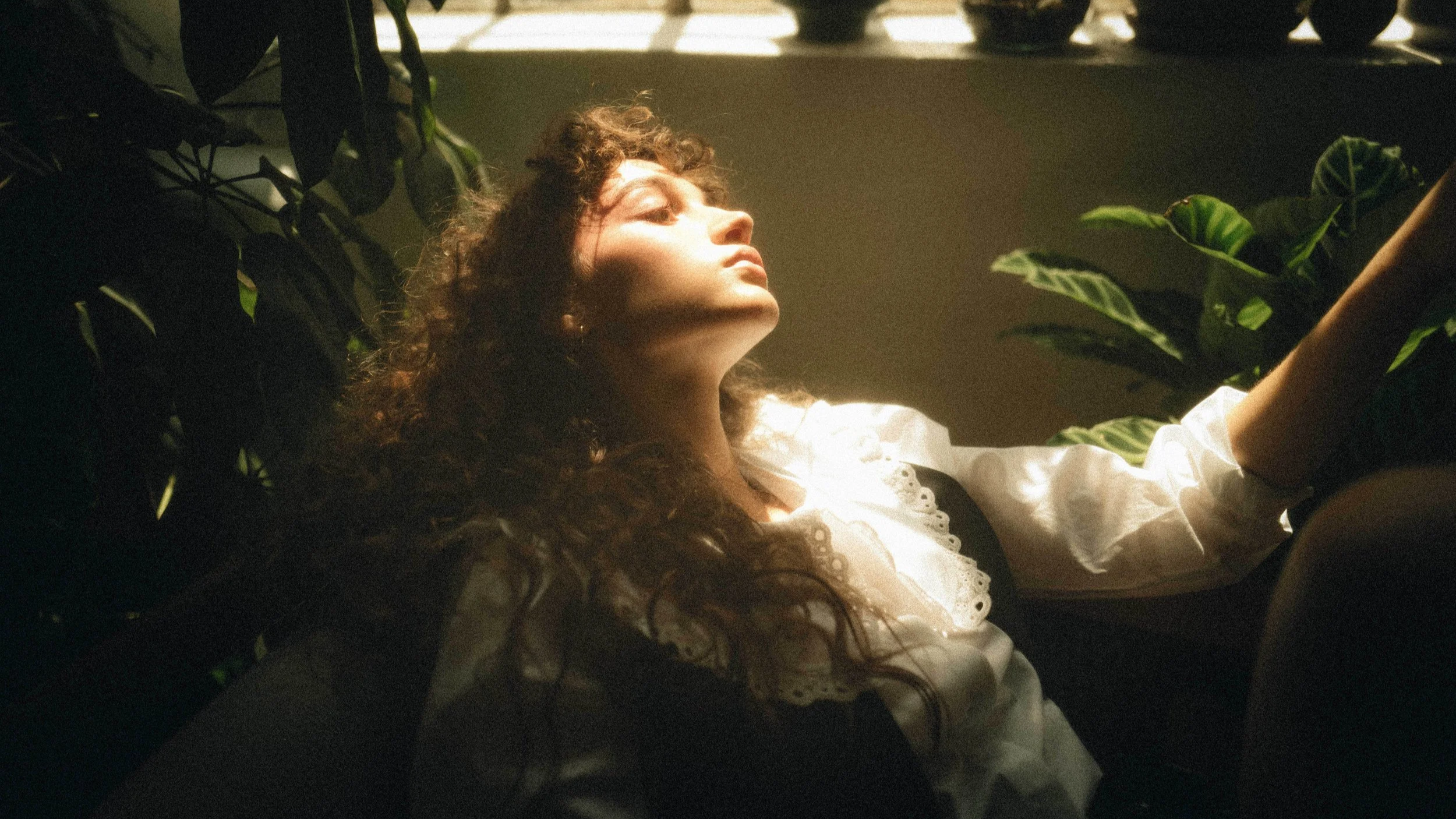
Photo: Eileen Jordan HMU: Hannah Mata Styling : byc Styling
AFFECT: Who are you - how would you describe yourself as an artist?
Caro Schaeffler: I'm Caro, a model, influencer, and musician. The latter takes up almost all of my time and brain capacity at the moment. I think that, regardless of the medium, my art is mainly about making the world that exists in my head accessible to the outside world.
A: How did you originally get into art and fashion, and when did music become another form of expression for you?
CS: My mom gave me my first diary when I was 5. I've been writing ever since. Funnily enough, I recently found a “song” in that diary that I wrote about my mother in the bathtub. Looking back, she was also the one who introduced classical art such as painting and drawing into my life. She has been painting herself for as long as I can remember, which inspired me to start doing it myself at an early age. At some point, photography and social media were added as spaces for creative output. Even with my content, which combines art and photos, my primary goal has always been to make my emotional world and romanticized worldview tangible to others. Music came about rather by chance when, while not entirely sober at a party, I was asked if I could imagine transferring the world I create on social media to music. Somehow, I had such a strong feeling that this was a great opportunity for me that I showed this stranger years-old “fun demos” of mine without thinking twice. A week later, I was sitting in a real studio for the first time, and I haven't stopped making music since.
A: What does fashion mean to you personally?
CS: For me, fashion is the first piece of information about a person that people consciously perceive before they actually interact with each other. So it's also a creative way of expressing your own character. However, I have to say that I love wearing beautiful things, but in everyday life other forms of expression play a greater role for me.
A: You know the fashion world inside out. How do you perceive the modeling and fashion industry today?
CS: As an incredibly fascinating but tough place to be. I would say that no other world has such diverse and interesting characters as this one. That's why I love it. At the same time, the pressure from prevailing ideals regarding body image and appearance is incredibly high and toxic.
A: When you express yourself as a model vs. through your music - how different does that feel?
CS: For me, it's not even remotely comparable. As a model, I (mostly) have no say in the creative vision. I am a service provider who implements other people's ideas as best I can. That can be fulfilling and fun if you like the idea, but of course that's not always the case. Music, on the other hand, is the most profound and personal form of creative expression I have found so far. That's why it fascinates me so much. When I drove home after my first studio session and had my very first real demo, a feeling that was extremely preoccupying to me at the time, compressed into 3 minutes as an mp3 on my phone, it was the craziest feeling ever. The fact that I can make my inner life not only audible but also tangible through music is the best outlet ever.
A: Which topics or feelings do you deal with particularly intensely in your music that might otherwise not find a place?
CS: Actually, all the ones I can't stage aesthetically in photos. So very personal, sometimes unpleasant feelings. Sometimes I realize how personal the lyrics I write are and then I doubt whether publishing them is really such a good idea. But most of the time, I'm reassured by the thought that no one knows exactly who or what it's about, haha...
A: Have you ever had moments when you felt overwhelmed or controlled by others in the industry?
CS: Absolutely. I feel that the fashion world in particular constantly challenges your morals and personal boundaries. I've definitely had situations where, in hindsight, I would have behaved differently. The tricky thing about the industry is that it suggests that if you don't do it, 100 others will gladly take your place in seconds. That can put you under incredible pressure. As far as the music industry is concerned, I don't know if I've been around long enough to give my two cents. I've heard stories, especially from women, but I like to form my own opinion. The environment I'm currently in is definitely very great and respectful.
A: Have you ever felt like you had to go beyond your personal limits for career opportunities?
CS: When I was modeling, I was promised incredible opportunities and leaps forward once or twice. However, these came with unspoken expectations that were so contrary to my own morals that I ultimately decided not to do it. I'm very happy about that. Still, it's crazy to think that my career could be completely different today if I had gone through with it.
A: As a woman, you always have to prove yourself. What differences have you noticed between the fashion industry and the music industry, but also what similarities?
CS: First and foremost, I think you're constantly underestimated. In the worst case, people even think you're stupid just because of your appearance or gender. I've noticed this in all areas during meetings, especially when the people I'm talking to are older men. But now I try to rise above it, and it has actually worked to my advantage a few times when people underestimated me or my brain, haha. What's also annoying is sometimes being sexualized in situations where intellectual content is involved, but I think that bothers most women in most areas of life.
A: In your opinion, what would need to change so that women in the fashion and music industries can develop more freely and confidently?
CS: In an ideal world, the treatment of men and women should simply be the same. The same respect, the same pay, and the same appreciation. In the music industry, I now have the feeling that more attention is being paid to creating a pleasant environment for women. More women in productions and teams, as well as awareness concepts at concerts, etc., are important steps in this direction. Nevertheless, it is still the case that female artists, whether they like it or not, are often reduced to their gender by the outside world. That is so incredibly annoying. We definitely still have a long way to go. And I don't want to sound negative, but I don't even want to get started on the power structures in the fashion industry. In my opinion, many things that suggest positive change on the outside are simply good marketing measures without much substance behind them.
A: How do you deal with addressing very personal topics in your songs? Do you find it difficult to open up emotionally?
CS: To be honest, I don't think I can do anything else. Processing these personal thoughts is exactly what makes making music so special to me. Writing impersonal lyrics doesn't feel nearly as fulfilling. And I think you can hear and feel that. Even if you don't know the story behind it, you can always recognize a genuine feeling. That's why I want to keep doing it, even if it's scary.
A: Is there a song or project that you feel was particularly honest or courageous?
CS: I haven't released that many yet... But I think releasing my very first song, “Kreide,” was the most courageous thing I've done in a long time. Somehow, I find it incredibly difficult to make a name for myself in the music industry because I have so much respect and admiration for other artists. Probably classic imposter syndrome... It took me about six months to even tell anyone in my circle that I was making music. Not even my mother knew because I was somehow afraid of their reactions. It took a lot of effort to get from that starting point to the point where I felt ready for a release.
A: Many people talk about the influence of social media and influencers - do you think they can really bring about change in these areas today?
CS: I believe social media is an incredibly powerful tool. The problem, however, is how content is presented. I do believe that it is possible to reach many people with good, important content, but due to the algorithms, most of these people probably already share the same views anyway. Nevertheless, you should still take advantage of the opportunities within a framework that feels right for you personally.
A: How do you use social media yourself - more as a stage, a diary, or a statement?
CS: Probably as an aesthetically designed diary and insight into my thoughts. I also have very personal moments on social media where I show myself completely unposed and honest. Nevertheless, moments where I visit Paris Fashion Week completely styled are extremely unrealistic and posed.
A: If you see fashion and music as languages of your soul, what do you want to achieve with them in the world?
CS: I love romanticizing things, from feelings to moments. This creates a whole world of its own in my head that is real but still “enchanted” and beautiful (most of the time). I think I want to make this world accessible to other people through my art. A kind of refuge that is still so honest that you don't feel alone when it comes to certain issues. And I want women to feel strong and seen through what I do.
A: Is there anything you would like to share with young women who are looking for their own creative path?
CS: I think my biggest lesson was not to waste energy trying to convince people that you're not as stupid or superficial as you “look” (because men in particular often think that when you fit certain female stereotypes). If someone doesn't see or understand you, it's their loss. And in the best case scenario, being underestimated will work to your advantage at some point. Even if keeping calm is sometimes easier said than done.
By Noémi Zak