
The People Love Them: Nina Chuba & Momme Hitzemann on Balancing Friendship and Work in Their New Podcast”
When singer Nina Chuba and her close friend and collaborator Momme Hitzemann announced their new podcast “DIE LEUTE LIEBEN DAS” (“The People Love It”), fans were instantly curious. Known for her sharp lyrics and genre-blending sound, Nina now brings her voice to a different stage: one filled with laughter, honest conversations, and the kind of chemistry that only real friendship creates.
At AFFECT Magazine, we wanted to know what’s really behind the project: how it started, what it reveals about their creative partnership, and how friendship fuels both their music and their mic moments. In this interview, Nina and Momme open up about working together, finding balance between art and life, and why people really do love it.
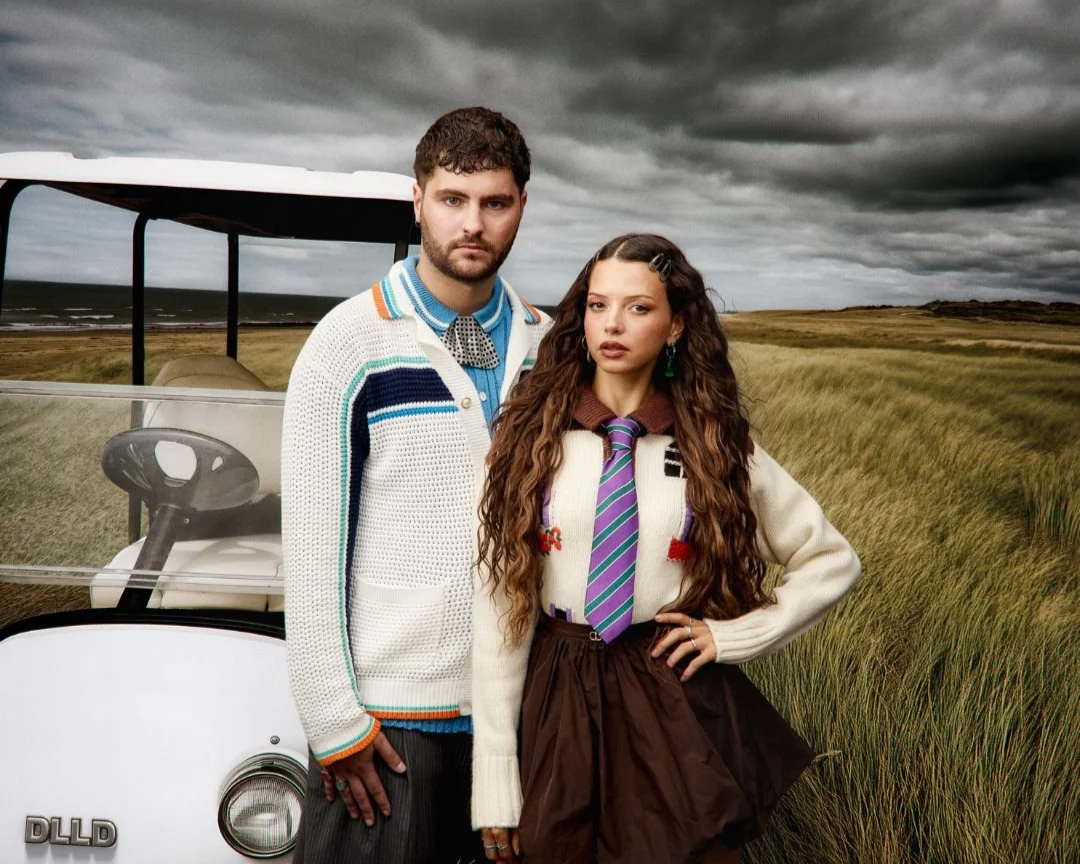
(C) Studio Bummens
AFFECT: Your podcast feels extremely approachable! How has your friendship changed as a result of working together? What new challenges have you faced?
Nina: Our friendship has changed in that we now spend a lot of time together professionally. But that doesn't prevent us from hanging out privately.
Momme: No, not at all.
Nina: Actually, we hang out so often and for so long, and it doesn't affect our personal lives. We don't get on each other's nerves, we always have something to say to each other, and we have a great time!
A: Only two episodes are out so far – how does it feel to be present with your voice in a whole new medium?
M: It feels good. It's unusual, at least for me, but it's a very exciting new experience and I'm glad to be able to cover this field as well.
N: For Momme, it's something completely new, of course, because it's the first time he's really been noticed as a person in public. And it's new for me, too. Every week, we broadcast our opinions to the world and, of course, we get opinions back—that took some getting used to. But now we're really into it, and it's nice to have a medium where we can chat for longer and express our opinions.
A: In the podcast, you talk a lot about old sessions at your house. What remains of that intimacy in your work today?
M: There isn't quite as much intimacy at work as there used to be. Simply because of the size that the Nina Chuba project has taken on. But we make up for that intimacy in our private lives. It sounds completely wrong, but we just hang out a lot. (laughs)
N: (laughs) The project has gotten much bigger! We rehearse with a lot more people and are on the road with a lot more people, but we still see each other every day, talk and chat. We exchange ideas all the time.
M: And we visit each other quite often during the day at work when we're not in the same room.
A: How important is it to you to create a space where fans can experience not only Nina as an artist, but also your dynamic as friends?
N: It's very important to us because we believe that we're still normal people from a small town. We experience many things just like everyone else, except that our job is a little more special. It's important to us to have a connection to our fan base and our community.
M: We want to give people the feeling that they are in the room with us and not just listening to us. We want them to feel like they're having a delicious coffee party with us. (laughs)
A: The term “talking in anger” came up quite often in the podcast, and then you gave your honest opinion: how open can you normally be in the industry, and was that perhaps why you felt you needed a podcast as a format to just talk freely without any filters?
M: We can't talk completely freely. Sometimes we have opinions about people and actions that we don't want to reveal. It's just not appropriate. And if we occasionally find people stupid—which, unfortunately, is unavoidable—we don't dwell on it in the podcast. Some things...
N: ...just don't belong in the public sphere. But of course, we share our experiences and try to be as honest as possible and not lie to ourselves.
Tour life and routines
A: You've had an intense summer of touring. Is there a particular memory from the festival stage that immediately springs to mind?
N: Yes, I have to say, the summer tour was really great. Especially being on the road with my team. I have to say, the “Hurricane” festival was my highlight of the year. The stage was huge, the crowd in front of it was huge. The concert was just so beautiful and emotional afterwards.
A: What does your annual rhythm look like: can your life be divided into phases such as songwriting, recording, promotion, and touring? Or is it a constant back and forth?
N: My life can be divided into phases very easily. At the beginning of the year, it was the “album writing phase,” then it moved relatively quickly into the “finishing phase” of the album. After that, it was the festival summer, the promotion phase, and now back to the tour phase. Of course, some things overlap, but you can divide it up quite well and it never gets boring.
A: Now, as summer transitions into fall, what are you looking forward to in Berlin, and what will you miss about touring?
N: Of course, I'll really miss hanging out with all my homies, my friends - the ones I was on tour with every day. It always feels a bit like a school trip. I'll also miss being super stressed. I love having a lot to do. That will disappear after the tour because I'm going to take a break from music to just gather my thoughts and experience things I couldn't experience during the year because I didn't have time for them.
A: In your podcast, you said that you find it much harder to write happy songs than sad ones. How do you approach the writing process for a ‘happy song’?
Nina: It always varies, I really can't say exactly. Sometimes I start with chords, sometimes with a beat. Sometimes with a lyric idea or a line, sometimes it starts with a melody and then it gradually comes together. It's hard to describe, it's more of a “go with the flow” process and also a craft that you learn through years of writing.
A: How would you describe the sound compared to your last release - what's new, what remains typical of Nina?
N: I've learned a lot about how to use my voice and my vocal tones, how to utilize them and also how to exploit them. In a way, I've become a bit of a rock singer in some songs, but I've also tried out a new electronic side with a lot of autotune and written a little differently lyrically. Nevertheless, that organic feel is still there, and there are a few reggae songs that could have been on the first album.
A: Your new album, Ich lieb mich, ich lieb mich nicht (I love myself, I don't love myself), deals with self-love, insecurity, and doubt - feelings that many people, especially those in their twenties, are familiar with. Do you feel that conversations in the podcast perhaps confront you with these issues in a different way than music can?
N: In the podcast, you can talk about things much more freely than in songs. I would say that songs are very condensed thoughts, tailored to rhyme, which for me are not always autobiographical. I don't limit myself to my own biography when I write songs – otherwise I would be very restricted. In the podcast, I talk a lot about myself and can discuss topics that are important to me or that concern me in a longer format. Just like Momme can.
A: You've emphasized several times that it's not just music that's important to you, but also personal stories, authenticity, and honesty, for example in the podcast or in your lyrics. How would you like to develop musically or in terms of content? Are there any genres or topics you still want to explore? Maybe even unexpected collaborations or completely new formats.
N: Of course, I want to explore lots of different genres. As soon as I stand still or only do one thing musically, it doesn't feel like further development to me. That's why I always have to do something new. I can only tell you exactly what that will be when the time comes. But right now, I'm really going to take a little break.
Interview by Lareen Roth