Everything That Happened at Coachella Weekend Two
Coachella Weekend Two has a reputation for being the quieter, slightly less exciting repeat of the first. This year, people who attended Weekend One are probably asking for a refund.
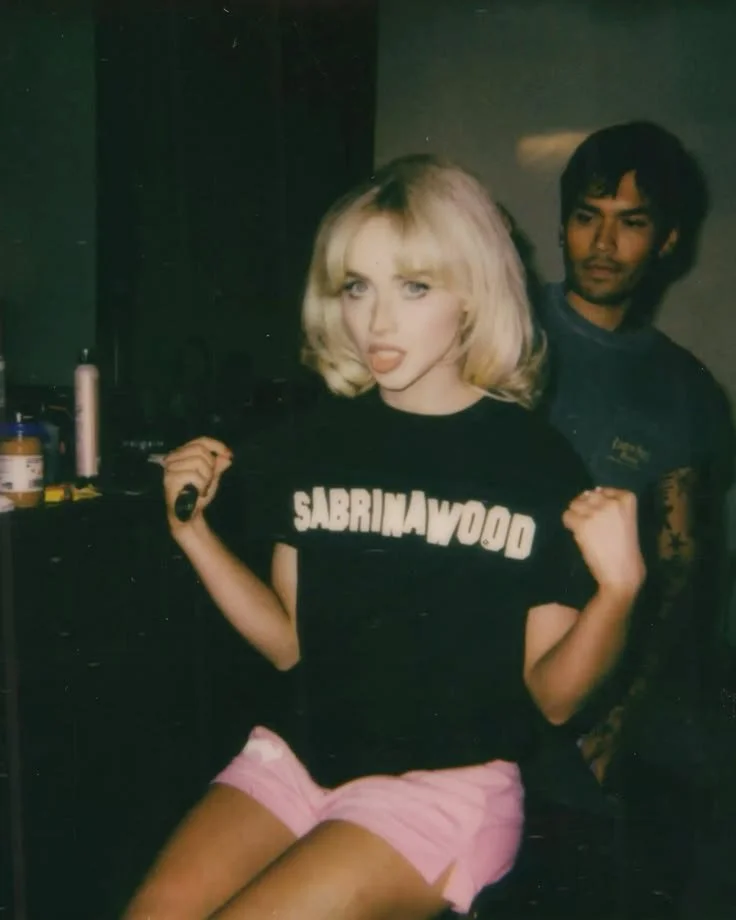
Friday night belonged to Sabrina Carpenter, and it was as much a theatrical production as it was a concert. The set, styled as a full Hollywood fantasy, came complete with costume changes, film references, and the kind of elaborate staging that makes you feel like you are watching something that belongs on Broadway rather than a dusty festival stage. The moment that broke the internet arrived mid-set, when Madonna appeared onstage for a medley of “Vogue” and “Like a Prayer,” with the two performing what appeared to be an unreleased track from Madonna’s upcoming Confessions II together. It was a full circle moment, a passing of some invisible torch between the original queen and the newcomer currently fighting for the title.
Saturday brought Justin Bieber back as the second headliner, and where Carpenter gave us spectacle, Bieber gave us something looser and more personal. His set leaned into nostalgia, anchored around a YouTube throwback section that scrolled through his back catalogue. The surprise of the night came when Billie Eilish, who had been watching from the crowd with Hailey Bieber, was brought onstage, where Bieber serenaded her with “One Less Lonely Girl.” SZA and Big Sean rounded out the guest list, but it was the moment with Eilish that everyone was talking about. Bieber closed the night with three words: “See y’all soon.” The Swag World Tour, it seems, is coming.
The Addison Rae and Olivia Rodrigo moment on Saturday was another standout. Rae paused mid-set at the lyric “I compare myself to the new It Girl” before Rodrigo walked out from the wings in a pink bra and vintage denim, giving the live debut of her just-released single “Drop Dead.” It was perfectly timed, perfectly staged, and the kind of crossover the internet had probably never even dared to wish for.
And then there were Kendall Jenner and Jacob Elordi, reportedly very much all over each other at the Bieber after-party. Coachella has always been as much about what happens after the sets as during them.
The festival’s marketing machinery deserves its own paragraph. Coachella is no longer simply a music festival. It is a content ecosystem, a brand activation platform, a two-weekend engine for generating cultural moments that live predominantly on screens rather than on the festival grounds. The YouTube stream, the sponsored lounges, the influencer infrastructure, the Revolve parties running parallel to the actual music all add up to something that has very little to do with the original spirit of gathering in a field to watch your favorite bands. Tickets cost hundreds of dollars, the surrounding activations are powered by corporate money, and the most talked-about moments are increasingly engineered to perform well on social media rather than to create meaningful experiences in person.
This is accompanied by the universal feeling of FOMO (fear of missing out), that it promotes. The livestream, the TikToks, the celebrity gossip posts, the constant feed of “you had to be there” moments that you can, in fact, watch back on YouTube or Reels, all of it is designed to make you feel like you missed something irreplaceable. At a time when a lot is happening in the world, and in America specifically, a festival where tickets run into the hundreds and every other tent is branded by a lifestyle or tech company is an interesting thing to be culturally invested in. The music this year was genuinely good. But Coachella has quietly become less about the lineup and more about the spectacle surrounding it, and that shift is worth acknowledging, even if it does not stop anyone from talking about it.
And maybe there’s one last question that lingers, just slightly uncomfortable beneath all the glitter and perfectly timed surprise guests. Because while the stages are filled with messages of freedom, queerness, and self-expression, the machine behind Coachella isn’t exactly that simple. The festival is owned by AEG, and its billionaire owner Philip Anschutz has faced ongoing criticism over past donations linked to organizations accused of supporting anti-LGBTQ+ agendas, claims he has denied and publicly distanced himself from, but that never fully disappear from the conversation.
So it leaves you with a slightly inconvenient thought: what does it actually mean to show up? To buy the ticket, post the outfit, live the moment. In 2026, going to Coachella isn’t just about music, it’s a cultural choice, maybe even a political one, whether people admit it or not. You can love the lineup, the chaos, the magic of it all, and still wonder if the whole thing feels just a little out of sync with the values it so effortlessly performs onstage.
Maybe enough to ask yourself whether you really want to buy into the whole Coachella fantasy and, by extension, support the system and the country shaping it, just because it looks that good on your feed.
Photos: Sabrina Carpenter / PINTEREST