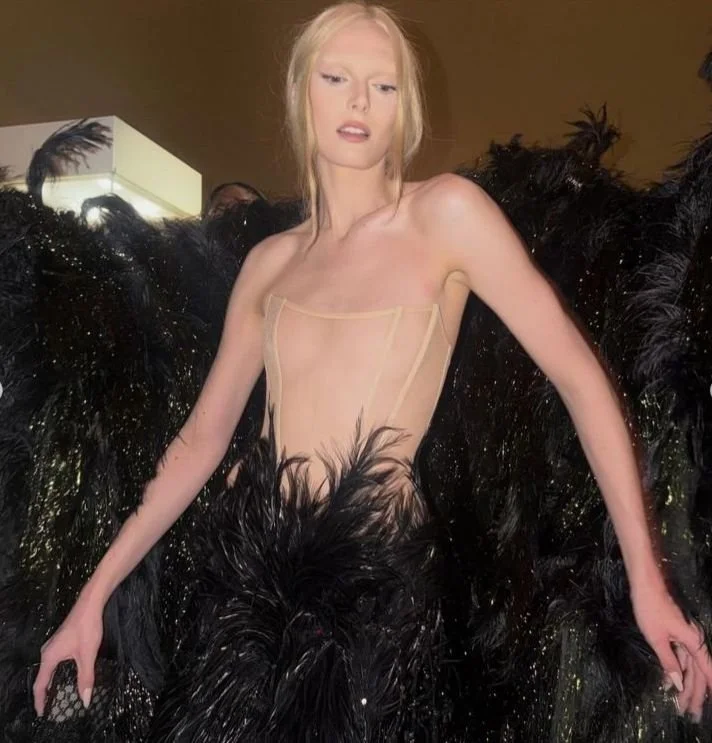
The Met Gala Is Starting to Feel Like the Capitol
We all know it. We all watch it. We all wait for it. The Met Gala.
And somehow, it feels like the last one happened only a couple of weeks ago. Every year, the first Monday in May returns with the same ritual: celebrity arrivals, impossible silhouettes, viral moments and carefully manufactured discourse. What once felt rare now feels constant, another night of spectacle in an endless cycle of content.
Held annually as a fundraising benefit for the Metropolitan Museum of Art in New York, the Met Gala still presents itself as fashion’s biggest night out or do you mean the most controversial one?
This past Monday, one of the world’s most exclusive events once again gathered celebrities, designers and carefully selected creatives under the guise of celebrating the museum’s latest exhibition, Costume Art. But this year, the question lingering beneath the flash photography and couture felt harder to ignore than ever: what exactly is being celebrated here?
A cultural institution built on glamour and excess, unfolding while the world burns in real time, starts to feel less aspirational and more dystopian. This year’s theme, Fashion is Art, leaned into a Hunger Games-esque colour palette and exaggerated silhouette, sharpening the ongoing debate that recent Met Galas have traded social awareness for aesthetic excess.
That tension peaked this year with the inclusion of Jeff Bezos, the Amazon founder and one of the world’s richest men, and his wife as the central sponsors. The tech billionaires, who have been repeatedly criticised for supporting ICE, brokering contracts with the Israeli government, labour exploitation, and wealth inequality, are now positioned at the centre of fashion’s most valued cultural event.
In recent years, the couple’s shift towards the art world has been increasingly noticeable. The Met Gala feels like its culmination.
When the Bezos enter cultural spaces, they don’t just attend. They reshape them. Their presence leaves an uncomfortable feeling. Their wealth can secure access to anything they want. Now they want the one thing that is not purchasable: cultural relevance. It’s not just ironic. It’s strategic. The Met is no longer just a fundraiser, but a rebranding move.
If billionaires actually believe that the arts are worth preserving, why has meaningful, sustained support for artists so often been absent from the same conversation?
Outside the event, the backlash was immediate. Protests spread across the city calling for a boycott of the gala, while Amazon employees organised A Ball Without Billionaires an independent fashion show reclaiming art as something created, not purchased. Protesters held signs reading You Can’t Buy Cool and Labour Is Art, which felt more aligned with the spirit of fashion than much of what was happening inside the museum itself.
At the same time, some of the internet’s favourite Met Gala regulars, from Bella Hadid to Zendaya and Billie Eilish noticeably skipped the event. Maybe it was scheduling. Maybe they didn’t find an outfit (haha). Or maybe, for the first time in a long time, the optics of attending started to outweigh the glamour of being seen there.
There is a growing disconnect. It has become clear that it is no longer about fashion but about publicity. Because at this point, not showing up means something. But so does showing up.
Remember Hailey Bieber wearing an ICE OUT pin at the Grammys or Bad Bunny calling out ICE at the Super Bowl? And yet here they are, all forgotten when attending Fashion’s biggest event of the year, endorsed by what they once criticised.
For an event so culturally dominant, its political silence felt less accidental and more like a form of curated ignorance, a purposeful detachment from everything unfolding beyond the red carpet.
The Met Gala still sells itself as a celebration of art and fashion. But this year, more than ever, it felt like a real-life Capitol moment straight out of The Hunger Games a room full of spectacle, excess and curated glamour, unfolding while the world outside grows increasingly unstable. The proximity to power has always been part of the appeal, but rarely has it felt this visible, this unapologetic, or this dystopian.
by Julia Petersen
Photos: Alex Consani Instagram