
The New Berlin Art Scene: An interview with artist Ceren Neccar
A big city like Berlin gives you thousands of scenes every day that disappear almost as quickly as they happen. Someone sitting opposite you on the U Bahn. A coffee between two people whose relationship you know nothing about. A bag resting between someone's legs. A hand holding a book. People waiting, leaving, arriving somewhere. Most of us barely register these moments. Ceren Neccar does and paints them. Her work lives somewhere between observation and memory. Rather than giving us the entire story, she often removes the part we instinctively search for first: the face. What remains are bodies, clothes, objects, gestures and color. Her paintings turn ordinary encounters into fragments of something larger, leaving enough unanswered for us to build our own narrative around them. There is something young and urban about Ceren's world. Her subjects belong to the rhythm of contemporary city life, yet the medium places them inside a much older tradition. At a time when a new generation of artists is finding its way into galleries, exhibitions and cultural spaces that have historically been difficult to enter, Ceren is already building a visual language of her own. After featuring her work in AFFECTs print 02, we wanted to return to the person behind the paintings and talk about where that language began, what Berlin gives her and what it actually means to be a young artist inside an old scene.
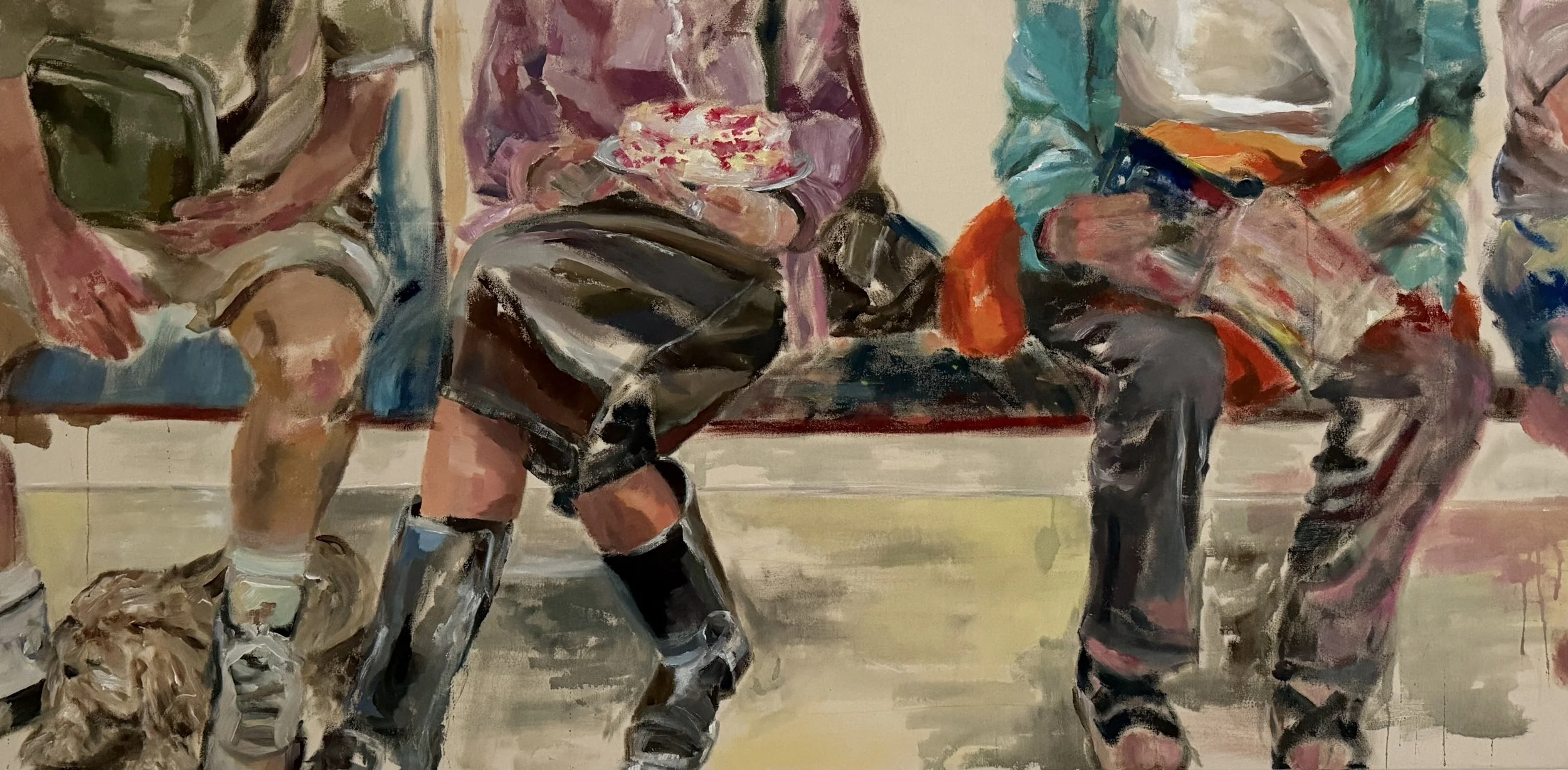
Image by Ceren Neccar
AFFECT: What did creativity look like in your childhood before you had any idea of what being an artist actually meant?
CEREN: Playing. I grew up with a huge garden shared by many families. I was always inventing games, making up stories, and creating little worlds of my own. My sister and I also watched Disney movies on VHS and drew scenes from them afterwards. Creativity was simply a natural part of playing.
A: Do you remember the first time you realized that making art could become more than something you simply enjoyed doing?
C: After my first exhibition in Berlin “Sommer ohne Pool “ I knew that this was the right path for me.
A: When did you begin developing a visual language that actually felt like yours?
C: I tried many different styles, from abstract to realism. Then I realized that I love playing with colors and using visible brushstrokes to express what I have seen and felt.
A: Your paintings often capture very ordinary situations that most people would probably walk past without thinking twice. What makes a moment worth painting for you?
C: I move around the city a lot and consciously take in my surroundings - whether it’s a typographic detail from a store around the corner, a person in the U-Bahn, or a piece of architecture. There is always something special in everyday life, but you have to be open to see it.
A: How do you collect these moments? Are you constantly taking photographs, making notes or simply remembering the things you see?
C: My phone is my sketchbook.
A: Your paintings feel intimate even when the people in them are strangers. Where does that intimacy come from for you?
C: I think that intimacy comes from the fact that the moments aren’t staged. I capture people and things in their natural, unposed state, which makes the paintings feel more honest and intimate.
A: Color feels emotional rather than purely realistic in your paintings. How do you know what color a memory or moment needs?
C: I love to play with colors. I paint what I see and feel in that moment. When I look at a white wall, for example, it’s never just white. It might have a green undertone, or perhaps the atmosphere feels warm and I see a delicate red tone within the white. That’s how my color combinations come together.
A: Berlin seems almost impossible to separate from your work. What does this city give you visually that another city might not?
C: Chaos and history.
A: Berlin can be incredibly anonymous while also being strangely intimate. Does that contradiction influence the way you paint?
C: Definitely. The anonymity allows me to observe people and even photograph them without them noticing me. Sometimes it actually scares me how invisible you can be in such a big city.
A: If you had to paint one scene that represents being young in Berlin right now, what would be happening in it?
C: It would be a loud painting, full of chaos and possibilities: a group of young people outside a Späti or on their way somewhere in the U-Bahn.
A: Do you think your work could exist in exactly the same way if you lived somewhere quieter?
C: The process would be the same, but the motifs would change.
A: The art world still has a reputation for being difficult to enter and heavily shaped by established names and institutions. Did it feel intimidating to enter that industry so young?
C: You have to be your own biggest fan and keep doing your thing. I believe there is room for everyone, and I love being inspired by other artists. But yes, it can be intimidating, especially when it comes to galleries. I’ll never forget a gallery owner rejecting me and telling me that they didn’t support “ego shows”
.A: Do you feel like young artists are genuinely being given more space right now or are they still expected to wait until someone older decides they are ready?
C: Absolutely not. Social media and events are great ways to connect with people and create your own opportunities. We’re ready when we feel ready.
A: Has being young ever made you feel underestimated in a professional art space?
C: Yes. I was once part of an international group exhibition, and I was one of the youngest artists. The curator saw me more as a beginner rather than someone on the same level, which was an interesting experience. It definitely made me aware of how much age can influence the way people perceive your work.
A: Collaborations, exhibitions, social media, selling work, creating new work: how much of being a young artist today actually happens outside the studio?
C: The process starts outside the studio, where I develop ideas and find the moments I want to paint. In the studio, I bring them together and finish the work. Then collaborations, exhibitions, and social media bring the work back into the world. So it’s really a cycle.
Interview by Lareen Roth
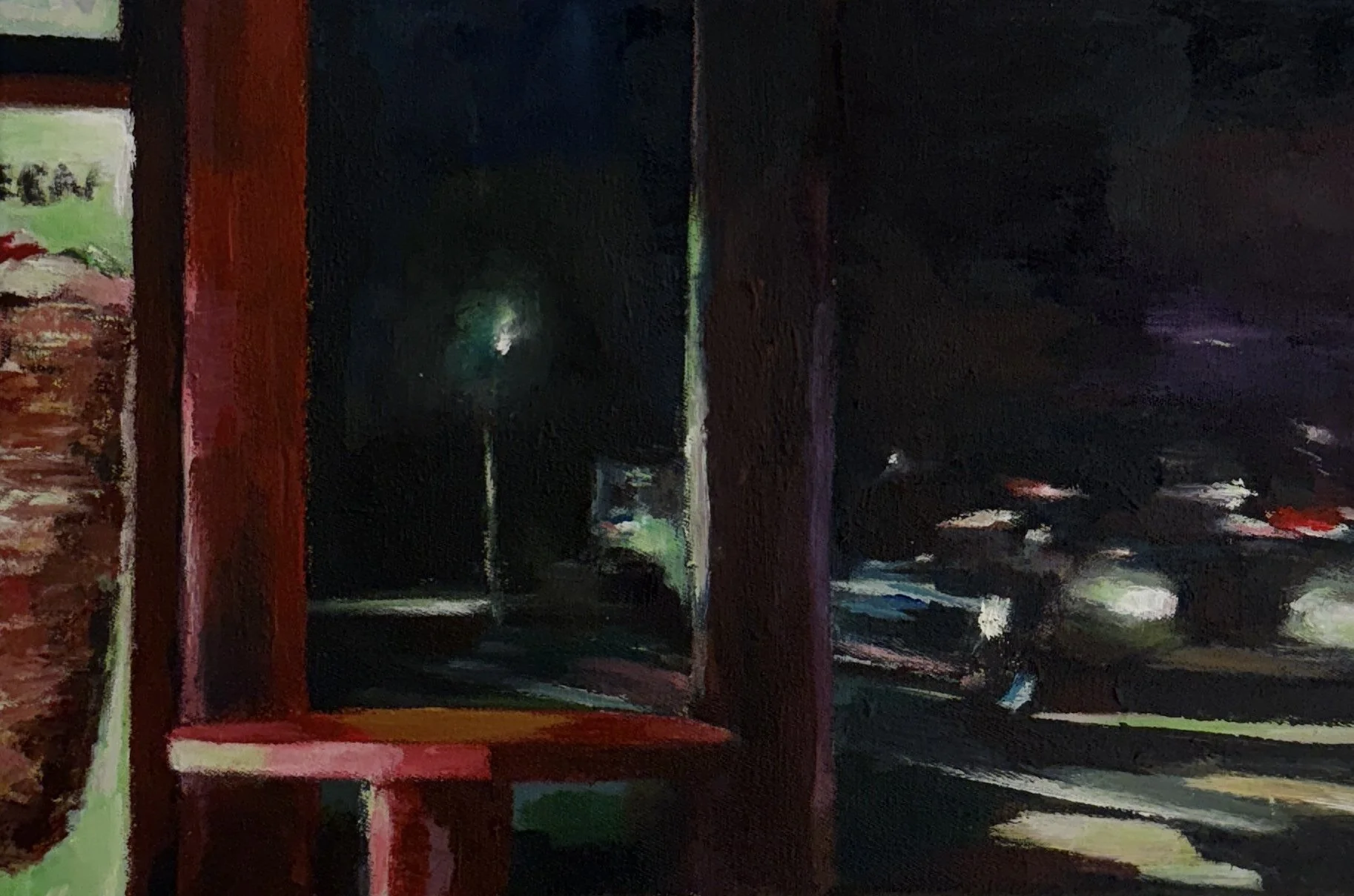
Image by Ceren Neccar