
Was I Written by a Man or a Woman And Why This Question Haunts Me
11:57pm and once again the algorithm delivers something that feels unserious at first, until it isn’t.
It started, as so often, on Tik Tok.
“Was he written by a man or a woman?”
What began as a joke quickly became a lens. A way of categorizing fictional characters, then celebrities, then men encountered in real life. The question spread because it named something people already felt but had not articulated yet: the way characters are written reveals deeper assumptions about gender and power.
To be “written by a woman” has come to mean something almost unreal. Men are respectful, emotionally intelligent and unafraid of femininity. They communicate. They listen. They show softness without it being framed as weakness. Their masculinity is not rooted in dominance and violence but in complexity and care.
Hence, these men are rarely flawless. They are allowed contradictions and failures. They do not have to be heroes to be compelling. Basically, they’re just… human beings. Which already feels unrealistic. Not because it is. But because we’re not used to it.
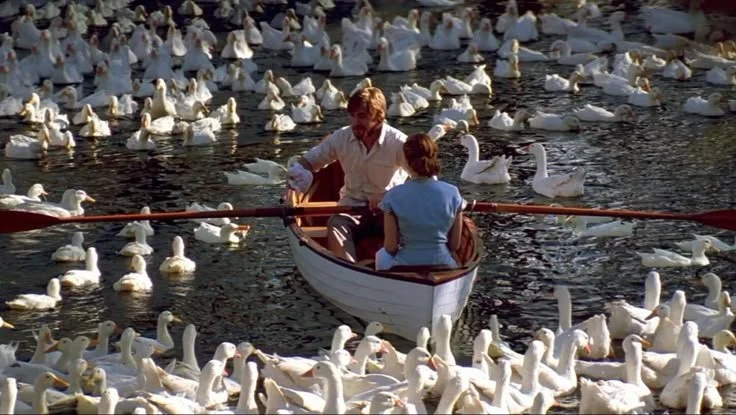
And yet, these characters often feel fictional in the most literal sense. Too good to be true. As if kindness and respect belongs more to fantasy than reality. Take Noah from The Notebook. He writes letters for years without a reply. Builds a house exactly as she once described it. Waits. Stays. He’s clearly written by a woman.
Now compare this to how women are so often portrayed by men.
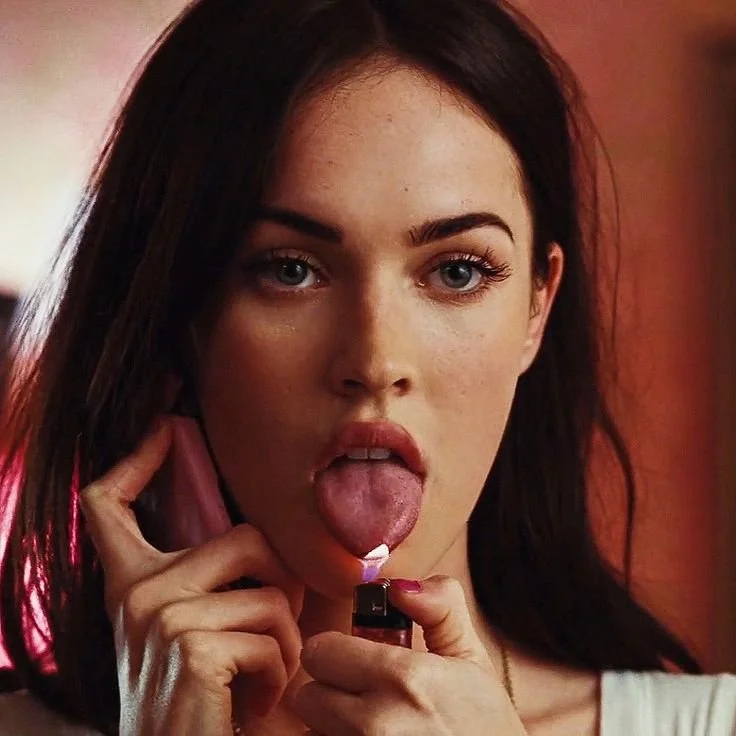
The male gaze is persistent and loud. Women appear filtered through desirability for men. Their bodies are described in vivid, unnecessary detail, while their inner lives remain vague or underdeveloped. They sleep in full make up and tight lingerie. Wake up flawless. Even in a crisis, obviously. You know exactly how she looks. You have no idea who she is. In these narratives, women are one-dimensional, especially when placed next to a male character. Men are given backgrounds, motives and moral dilemmas. Women are given love interests. A side quest.
In these stories, women have one job: To serve men. To stay quiet and sexy. To support male development without demanding their own space.
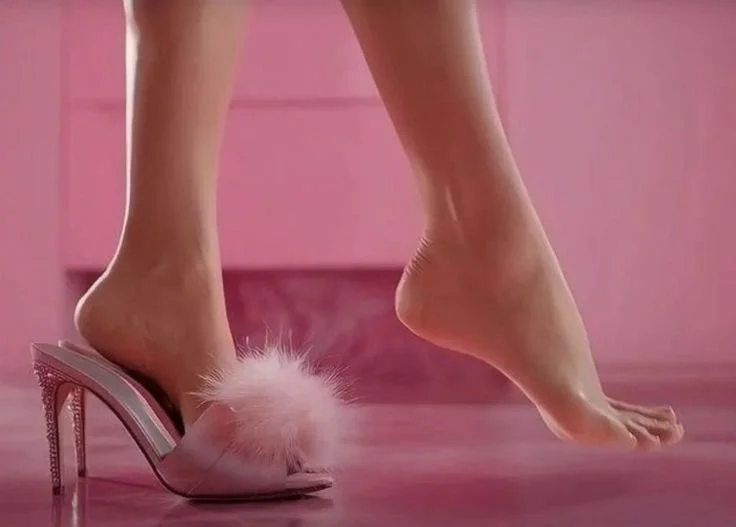
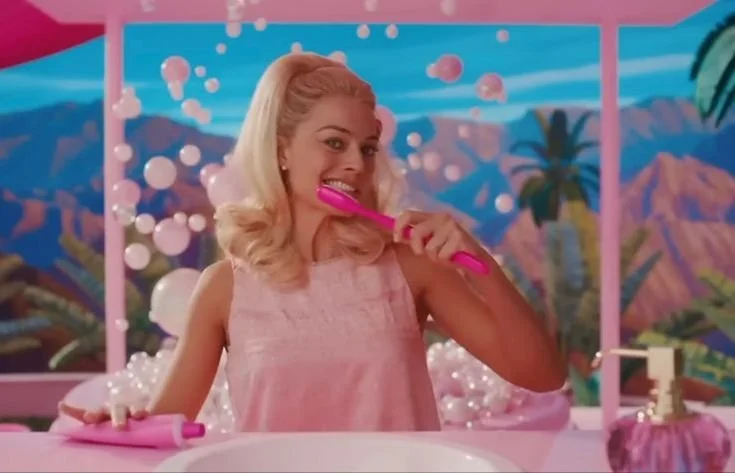
A common example appears in the movie Barbie directed and written by Greta Gerwig . A movie criticizing the patriarchy. A movie in which in Barbieworld women are the center of the world. Nonetheless Ken, the male side character, is given a storyline, an identity crisis and emotional development. Even though Barbie sees him as an accessory to Barbie’s journey, the audience receives a multilayered character that takes up a big part of the storyline. Here again, the side male character is written as a character in his own right. Even in a world built for women, men still get the better writing. Women are rarely extended that same generosity.
This is where the question stops being abstract and starts feeling personal. Because when someone asks, “Was I written by a man or a woman?”, they are no longer talking about fiction. They are talking about what kind of inner life an individual appears to have been allowed.
To be written by a woman, on an individual level, means to be imagined as a full person. To have contradictions, softness and emotional depth. They are human and it is not conditional. To be written by a man often means something else entirely. Personality is secondary to appearance. One’s presence is often only justified in relation to another, often a man. Depth becomes a bonus, not a baseline.
The haunting part of the question lies in recognition. Asking whether someone was written by a man or a woman is ultimately a way of asking: Was I imagined as a protagonist or as a supporting role in someone else's story? Am I a multifaceted and interesting character or am I just nice to look at? Am I seen, or just observed?
Here, the answer turns either into a compliment or a roast. Because if there is a choice, everyone wants to be written by a woman. Not for perfection, but for depth. To be imagined as someone with an inner life, not just an outer surface. Being “written by a woman” has become shorthand for being fully human: contradictory, soft, flawed and interesting even when no one is looking. Compared to that, being written by a man too often still comes with conditions: be desirable, be easy and useful in someone else's story.
Hence, the question keeps circulating and not as a joke anymore, but as a measurement of recognition. Does not everybody wants to be fully seen as a character with depth?
Of course everyone wants to be written by a woman.
Who would choose otherwise?
by Alica Fischer 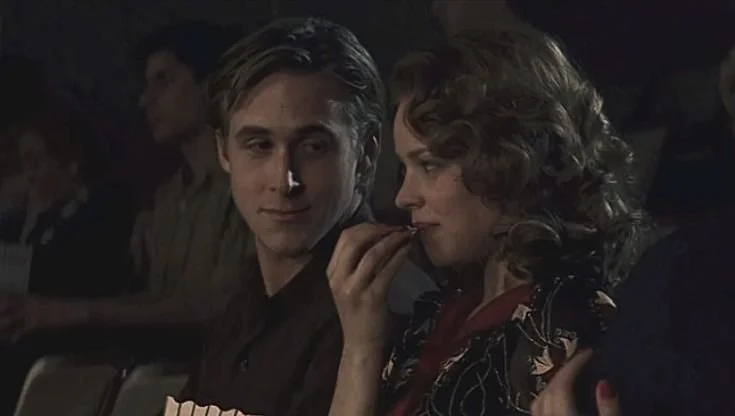
PHOTOGRAPHY BY PINTEREST