
Growing up as a woman often begins with small lessons and questions.
How many children do you want one day?
When are you getting married?
Be careful when walking home at night.
Do not drink too much.
Always watch your drink.
Hold your keys between your fingers when walking outside.
These questions are often presented as common sense and as the responsibility of women and girls to protect themselves. But behind these personal experiences lies something larger. It is not a coincidence that all women and girls around the world recognize these situations. It is structural inequality. Today, there is still no country in the world that has achieved full gender equality. And at the current pace of progress it would take another 286 years to overcome this gap.
And growing up as a woman means learning to navigate these inequalities long before fully understanding them.
Economic inequality is still one persistent reality women face, even though, in theory, it should be among the easiest to change. In Germany, the unadjusted gender pay gap remains at 16 percent, unchanged in recent years. And even after accounting factors such as working hours or education, women still earn six percent less than men.
Over a lifetime, these differences accumulate dramatically. On average, women earn nearly 50% less income over the course of their careers than men. This so-called lifetime earnings gap reflects not only wage differences but also the unequal distribution of work itself. Ironically, women often work more than men overall including paid and unpaid labor: Welcome care work. Care work sustains families, economies and communities, but it remains invisible, undervalued and un(der)paid.
For many women, growing up includes slowly realizing that society expects them to carry this not appreciated burden.
Perhaps the most defining reality of growing up female, however, is the constant negotiation of safety. In Germany, 132 women were killed by their current or former partner in 2024. In the same year, 265,000 became survivors of domestic violence, nearly three quarters of them were women.These numbers reflect only the cases that reach official statistics. Experts assume the true figures are significantly higher, as many forms of violence remain unreported. And latest data shows that in Germany only less than 10% of the cases are reported.
Sexualised violence, harassment and catcalling shape women’s experiences in public spaces. Studies show that more than half of women avoid certain places or public transportation at night due to safety concerns. For many women, fear and precaution becomes an everyday calculation.
Which route is safest?
Which clothing feels less risky?
Which situation feels uncomfortable but not dangerous enough to protest?
The result is not only physical danger but restricted freedom. Violence or the constant possibility of it, quietly limits women’s movements, opportunities and participation in public life. Growing up as a woman today means living in a paradox.
Yes, women have gained rights and visibility and opportunities over the past century (but not all over the world). Girls are more encouraged to pursue education, careers and independence in ways previous generations could have not imagined.
But no, it is not enough. Because the structures surrounding them have not changed at the same pace. Inequality persists in wages, unpaid labor, safety, representation and legal protections. So no, equality has not been achieved yet.
In essence it is so simple: women's rights are human rights. And human rights are non-negotiable. The struggle for women’s rights is therefore, not only about gender but about justice and democracy itself. Defending women's rights means defending the foundation of an equal and just society.
It also means refusing to accept the pace of change as inevitable. We should not have to wait 286 years for equality.Growing up as a woman should not mean growing up with structural disadvantages, constant precaution or unequal opportunities.
It should mean growing up with the same freedom, safety and possibility as anyone else.
by Alicia Fischer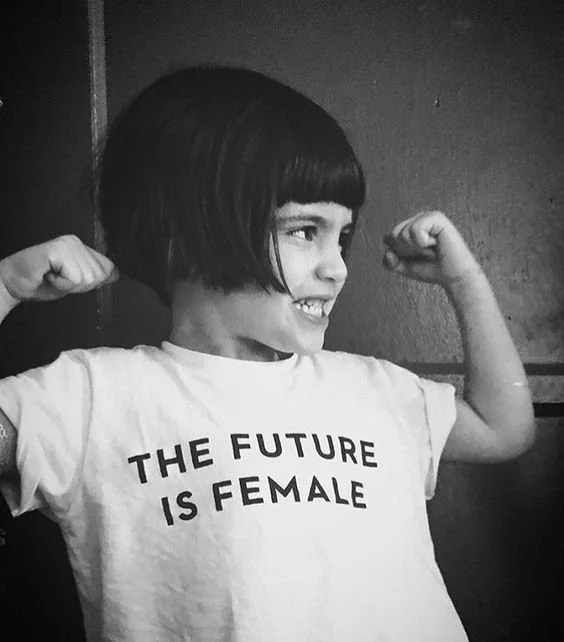
PHOTOGRAPHY BY PINTEREST