
Work Doesn’t Own Me: Why Gen Z Refuses to Live for a Job
For years, Gen Z has been accused of lacking work ethic. The narrative: young people are unwilling to commit, demand too much flexibility, and value comfort over contribution. What once circulated mainly in opinion columns and social media debates has now reached the political mainstream.
When German Chancellor Friedrich Merz publicly questioned whether an average of 14.5 sick days per year is “really necessary,” and when reduced working hours were dismissed as “Lifestyle Part-Time,” the message was clear. According to this logic, Germany’s economic challenges are not structural, they are generational. The attitude of young workers, Merz suggested, is putting prosperity at risk.
But this framing overlooks a key question: why is Gen Z relating to work so differently in the first place?
A changing relationship to work
Previous generations entered a labor market that offered a relatively clear exchange: full-time work promised financial stability, upward mobility and long-term security. Today, that equation no longer holds.
Despite higher levels of education, many young people face unstable employment conditions, temporary contracts and an increasingly competitive job market. At the same time, living costs continue to rise. Buying property (once a realistic goal for middle-income earners) has become unattainable for large parts of the younger generation. Studies show that Gen Z carries higher levels of personal debt than previous cohorts and needs to save significantly longer to reach the same level of financial security.
In this context, work no longer guarantees the outcomes it once promised and often offers little long-term payoff.
This shift has consequences. If full-time employment no longer leads to stability, it becomes harder to justify organizing one’s entire life around it. The result is not a rejection of work itself, but a reassessment of how much space work should occupy.
“Lifestyle Part-Time” and the labor market contradiction
The debate around part-time work illustrates this reassessment. The business wing of the Christian Democratic Union party is proposing a ban on the legal entitlement to work part-time. According to them, reduced working hours as a “lifestyle choice” worsen the situation of labor shortages and harm the economy. Those who can work more should work more. Yet this argument collides with another reality: many young, qualified workers report difficulties finding stable employment at all.
Germany simultaneously faces a shortage of skilled labor and a growing sense of insecurity among job seekers. In 2022, around 40 percent of German companies reported that they were unable to fill open positions. At the same time, hiring freezes, long recruitment processes and short-term contracts have become increasingly common.
The contradiction points to a structural problem. The issue is not simply a lack of willingness to work, but a mismatch between labor market expectations and economic conditions. Flexible working models, including part-time arrangements, are often framed as indulgence, even though they are, for many, a pragmatic response to burnout, care responsibilities or mental health concerns.
The political instrumentalization of sick leave
A similar dynamic is visible in the debate around sick leave. Rising numbers of sick days are frequently cited as evidence of declining work discipline. Merz has linked the increase to the introduction of telephone sick notes, suggesting abuse of the system.
However, experts point out that higher sick leave figures are also linked to increased psychological strain. Mental health issues, stress-related illnesses and burnout diagnoses have risen steadily in recent years. Younger workers, who entered the labor market during overlapping crises (from the pandemic to inflation and geopolitical instability) are particularly affected.
Seen in this light, sick leave is less a sign of laziness than a symptom of a workforce under pressure.
Small luxuries and the turn toward experience
Public debates about Gen Z’s work ethic are often paired with criticism of their spending habits. Daily coffees, skincare routines or frequent travel are cited as evidence that financial insecurity is, at least in part, self-inflicted. According to this narrative, young people could afford stability if they simply consumed less. Fewer treats, fewer trips, fewer other “excessive expenses”.
But this logic reverses cause and effect.
For many in Gen Z, long-term financial goals have become increasingly abstract. Property ownership, substantial savings or a predictable retirement feel unattainable even with disciplined budgeting. In such an environment, the incentive to delay gratification weakens. Saving no longer feels like a reliable path toward security, it feels like an indefinite postponement without a clear payoff.
As a result, priorities shift. Instead of organizing life around distant, uncertain milestones, many young people invest in experiences that offer immediate value. Travel, in particular, has taken on a new role. It is not simply consumption, but a form of meaning-making in a context where traditional markers of success are inaccessible. If financial stability cannot be secured, experiences become a way to extract value from the present.
These choices are often labeled as hedonistic. Yet they are better understood as adaptive. When the future feels structurally blocked, focusing on the present becomes rational. Treats and travel do not replace wealth, they compensate for its inaccessibility.
Research on so-called “treat culture” consistently links these patterns to economic insecurity rather than excess. Spending money on small luxuries functions as a response to diminished confidence in long-term mobility. They are symptoms of precarity, not its cause.
Seen this way, Gen Z’s spending habits are not evidence of irresponsibility. They reflect a recalibration of value in today's economy.
“Rather unemployed than unhappy”
One phrase often quoted in discussions about Gen Z captures this tension: “Rather unemployed than unhappy.” Critics read it as a refusal to take responsibility. Supporters see it as a boundary.
The statement reflects a broader shift in values. For Gen Z, mental health and quality of life are not secondary to professional success. The willingness to endure stress, long hours and instability without clear reward is decreasing, not because work is seen as unimportant, but because its costs are more visible.
This attitude challenges a work culture that has long been based on the virtue of endurance.
A renegotiation, not a rejection
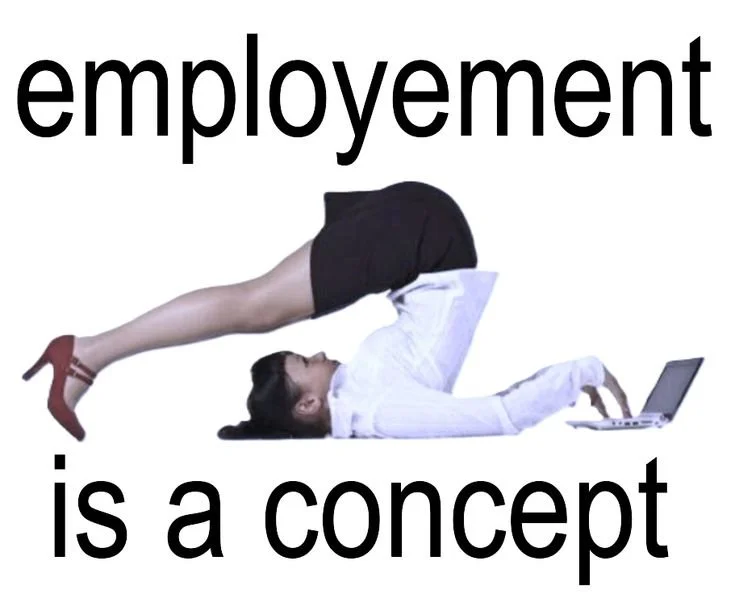
Gen Z is not withdrawing from the labor market. It is renegotiating its terms. Flexible working hours, clearer boundaries and a stronger focus on well-being are not signs of declining motivation, but responses to a system that no longer delivers the security it once promised.
Framing these changes as a moral failure risks missing the bigger picture. The question is not whether Gen Z is willing to work, but whether the current model of work is still aligned with economic reality.
As long as full-time employment fails to guarantee stability, the expectation that work should dominate life will continue to decline. What looks like a generational conflict may, in fact, be a structural adjustment, one that challenges long-held assumptions about productivity, success and responsibility.
Work no longer owns the future.
Gen Z is simply acting accordingly.
by Luisa Gabriel




PHOTOGRAPHY BY PINTEREST