
It Bags & The Cycles We Go Through Together
Maybe our obsession with bags started much earlier than we think. Maybe it started with a bag we can barely remember.
A tiny pink purse carried proudly through the supermarket, despite containing absolutely nothing. Then came the school bag we chose with the seriousness of a major life decision, because somehow showing up to first grade with the wrong one felt socially devastating. A few years later, there were the tiny handbags filled with lip gloss, old receipts and things we definitely did not need. Then the tote bags, the party bags, the first bag we saved up for ourselves. And eventually, somewhere along the way, there is the bag. The one sitting in a saved folder, an open browser tab or somewhere on a mental wishlist. The one with a price that would make our seven-year-old selves wonder what exactly happened to us. Maybe that is the funny thing about our obsession with bags: it started long before we knew what an It-Bag was.
And somewhere between childhood and adulthood, bags stopped being simple containers for our things and became containers for something else entirely, taste, aspiration, status, memory, identity. Who we are, who we used to be and, sometimes, who we would quite like to become.
Which might explain why fashion has never been able to leave the It-Bag alone.
Clothes are complicated. They depend on proportion, sizes, seasons and occasions. A bag doesn't really care about any of that. You can wear the same one at 18 and 48. You can gain weight, lose weight, change your hair, change your entire wardrobe and the bag remains. Perhaps that permanence is part of its psychological appeal.
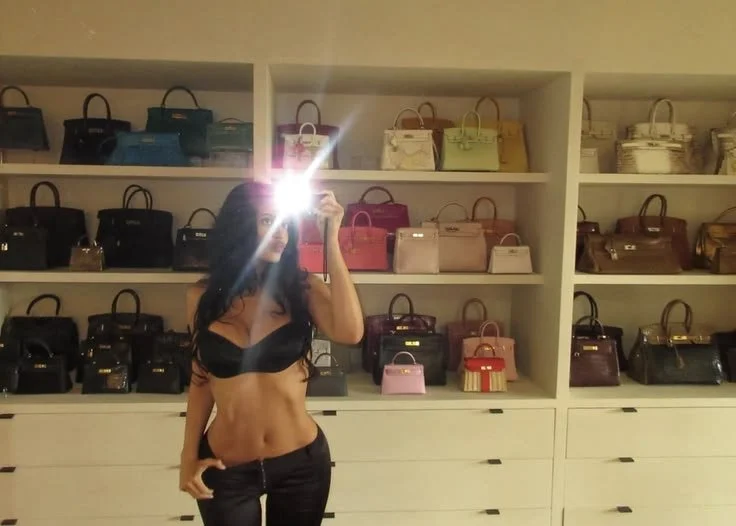
A bag also happens to be unusually good at communicating who we are or at least who we would like to be. A Birkin says something different from Balenciaga City. A beaten up vintage Louis Vuitton Speedy communicates something different from a pristine Chanel Classic Flap. The Row Margaux created an entirely different fantasy than the tiny Jacquemus bags that were everywhere only a few years ago. Sometimes the message is wealth. Sometimes it is taste. Sometimes it is access. Sometimes it is simply: I know.
And interestingly, the loudest status symbol is not necessarily the most desirable one. Research into luxury handbags has found consumers willing to pay more for bags with quieter branding than comparable versions with prominent logos. The theory is quite simple. If only certain people recognize what you are carrying, recognition becomes part of the appeal. The bag stops communicating with everyone and starts communicating with the people who know. That might be the most interesting thing about the modern It-Bag.
How Does a Bag Become an It Bag?
There are thousands of expensive bags. Very few become cultural objects. An It-Bag needs something beyond good design. It needs timing. Think about the Fendi Baguette and Sex and the City. The Balenciaga City and the paparazzi images of the 2000s. The Dior Saddle. The Chloé Paddington. The Louis Vuitton Speedy. The Chanel 2.55. The Birkin.
At some point these bags stopped existing purely inside fashion and entered culture.
We begin attaching people, places and periods of our lives to them. Certain bags can make an entire decade visible in your head. That is incredibly powerful because fashion is rarely only about what looks good. It is about what something represents at a particular moment. And then fashion gets bored. The bag becomes too popular. Everyone has seen it. Copies appear everywhere. The people who made it desirable move on. Eventually it gets pushed into the slightly embarrassing category of something we cannot believe we ever wanted. Until approximately ten years later when someone finds it on a resale platform, wears it with completely different clothes and suddenly it looks perfect again. Fashion has a short memory and an excellent recycling system.
The Psychology Behind It
Scarcity makes this even more interesting. When obtaining something requires more than simply having the money for it, the psychology behind luxury becomes especially effective . Waiting lists, limited quantities, archive pieces, discontinued colors and boutique relationships transform purchasing into access. Research on luxury consumption has repeatedly connected scarcity with perceptions of exclusivity and desirability. When something feels difficult to obtain, the difficulty itself can become part of its meaning.
The second life of the It-Bag in resale changed our relationship with bags as well. Twenty years ago an old designer bag was simply an old designer bag. Today it can be an archive piece. That language alone changes everything. Suddenly scratches can become patina. A discontinued shape becomes rare. A color nobody wanted in 2007 becomes the exact shade everyone is searching for in 2026.
Vintage culture has made fashion history searchable and purchasable. You no longer have to wait for a fashion house to tell you which bag matters again. TikTok, Pinterest, celebrities, stylists and thousands of girls scrolling through Vestiaire at 1am can collectively decide. And the houses know it. We are currently living through a strange period where new bags are introduced constantly while old bags are being rediscovered just as quickly. The next It-Bag might be walking down a runway in Paris. It might also be sitting in someone's mother's wardrobe.
Boys Want Bags Too
For a long time the handbag carried an unusually gendered history. Women carried bags. Men carried wallets, briefcases or backpacks. If a man needed something larger, fashion seemed determined to call it almost anything except a handbag. That distinction has become increasingly irrelevant. Men are carrying shoulder bags, totes, crossbody bags and increasingly silhouettes that would once have lived exclusively inside womenswear. The interesting part is not that men suddenly need somewhere to put their things. Obviously they always did. It is that the bag is becoming available to men as an object of styling and self expression in the same way women have used it for decades. For women, choosing a bag has always been partly a practical decision and partly character expression. Now menswear is finally having more fun with the same idea.
The Bags We Become
This is why bags feel more emotional than most fashion purchases. They physically carry our lives. Receipts from dinners. Lip products we thought we lost. Keys from our apartments. Boarding passes. Tampons. Sunglasses. Gum. Chargers. Notes. Someone else's lighter. A dress belongs to an evening. A bag can belong to years. It comes to work, dates, airports, breakups, supermarkets and nights where you somehow get home at 6am. It sits on restaurant floors and bathroom sinks. It gets scratched, overloaded and thrown into the back of taxis. Eventually the object that was once painfully new starts looking like yours.
And perhaps that is the final ingredient of an It-Bag that no trend report can really measure. We desire the bag because culture gave it meaning. Because someone cool carried it before us. Because it signals something. Because it is rare. Because it might hold its value. Because we have seen it enough times to want it and then wanted it long enough to convince ourselves it is timeless. But eventually, if we are lucky, all of that becomes secondary. It becomes the bag you carried through a particular version of yourself.
And that is why we never really cared about the (It-) bag alone.
by Lareen Roth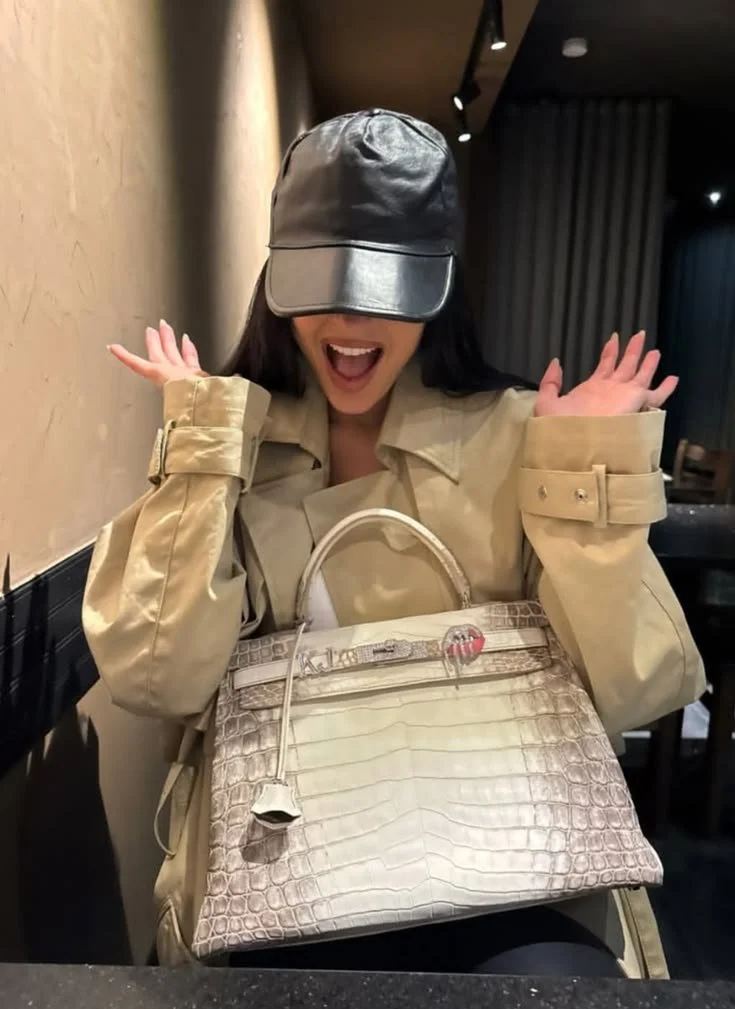

PHOTOGRAPHY by Pinterest / @kyliejenner