
Rewatching Ourselves: Why 2000s Nostalgia Feels So Personal Right Now
Tomorrow, on March 24, 2026, Disney+ is bringing back a piece of pop culture many of us grew up with: a Hannah Montana anniversary special. This time, Miley Cyrus returns not as a fictional character, but as herself, reflecting on the highs, the pressures, and the end of the show in 2011, in conversation with podcast host Alex Cooper.
For many, this isn’t just another TV special. It feels personal. Because revisiting Hannah Montana doesn’t just mean revisiting a show, it means revisiting a version of yourself. For fans, it feels like a full-circle moment. But it’s also part of something bigger: a wave of 2000s nostalgia that is currently shaping film, streaming, and fashion.
From High School Musical to The Devil Wears Prada, many iconic titles are celebrating their 20th anniversaries right now. And they’re not just being remembered, they’re being reintroduced. What’s striking is how these films and shows still feel present. Their aesthetics, soundtracks, and characters continue to circulate on TikTok, in memes, and in everyday conversations.
The 2000s don’t feel distant, they still feel very present. Part of that has to do with timing: the audience that grew up with these films is now in its mid-to-late twenties, close enough to remember everything, but far enough to see it differently. The people who grew up with these films are now adults. They revisit these stories with new perspectives, catching details they missed before, or relating to characters they once didn’t understand. At the same time, in a world of constant new content, familiar stories offer something rare: instant connection. You don’t need an introduction, you’re already emotionally invested.
Different Stories, Different Feelings
Each of these comebacks taps into a slightly different feeling. They don’t all evoke the same kind of nostalgia.The feeling shifts depending on the story and on how that story has aged alongside its audience.
Hannah Montana taps into something deeply personal. It recalls a very specific rhythm of life: coming home after school, turning on the TV and slipping into a world that felt both ordinary and slightly magical. Looking back now, it’s not just the show itself that returns, but the atmosphere around it and the sense of ease, of not yet being fully defined.
High School Musical, by contrast, was never just an individual experience. It was shared, repeated, almost ritualistic. The songs were memorized, the choreography copied, the lines quoted in sync. Revisiting it today brings back that collective energy, a reminder of how strongly certain moments were felt together, not alone.
The Devil Wears Prada occupies a different space entirely. It hasn’t simply been remembered, it has shifted in meaning. What once felt like a distant, almost exaggerated portrayal of adult life now feels recognizable. The dynamics, the ambition, the quiet pressure, they no longer belong to a fictional world. They echo real experiences.
And that shift is important. Nostalgia isn’t static. It evolves with the audience.
Wearing Nostalgia
The influence of these films isn’t limited to streaming platforms. The fashion and beauty industry is picking up on it, too. L'Oréal recently tapped into The Devil Wears Prada for a campaign, showing how deeply these stories are embedded in culture. And itt makes sense: the film has always been about style, ambition, and transformation.
Zara already released Hannah Montana pieces, bringing back rhinestone-heavy designs that defined early 2000s pop culture. Two decades later, its visual language still resonates and brands are picking up on that.
Continuing the Story
Not every comeback, however, is built on simply revisiting the past. With LOL 2.0 for example the approach shifts. Instead of recreating the atmosphere of the original, the film continues its story years later. The first LOL (Laughing Out Loud), the French original to the later adapted US movie, captured teenage life in the late 2000s, first relationships, friendship conflicts, early social media and the constant tension between independence and parental boundaries. It existed in a space where everything still felt open, where identity was in progress and mistakes didn’t yet carry lasting weight. That sense of immediacy is what made it resonate. LOL 2.0 moves beyond that moment.
The characters have grown older, and so have their problems. A daughter in her twenties returns home after setbacks in both career and relationships, while her mother is confronted with a new role as a grandmother. What was once a story about becoming becomes a story about readjusting. The tone shifts accordingly. The lightness of the original gives way to something more layered, it is less about beginnings, more about what happens when things don’t unfold as expected. Unlike other nostalgic revivals, LOL 2.0 doesn’t preserve the past. It lets it evolve.
Looking Back, Moving Forward
What makes this current wave of nostalgia interesting is that it’s not just about reliving the past. It’s about reinterpreting it and, in some cases, confronting what came after.
Watching Hannah Montana today feels different than it did in 2006. The Devil Wears Prada hits differently once work culture is no longer abstract. And High School Musical becomes less about high school itself and more about the feeling of belonging it once represented.
But not every story returns in the same way. Films like LOL 2.0 suggest that nostalgia doesn’t always offer a way back. It can also bring the past into the present, revealing what remains once that time has passed.
It’s not just about rewatching old films. It’s about rewatching yourself through the lens of what once felt true, and what has changed since. Nostalgia, in that sense, isn’t about going backwards. It’s about recognizing the distance between who you were then, and who you are now and understanding what happened in between.
by Luisa Gabriel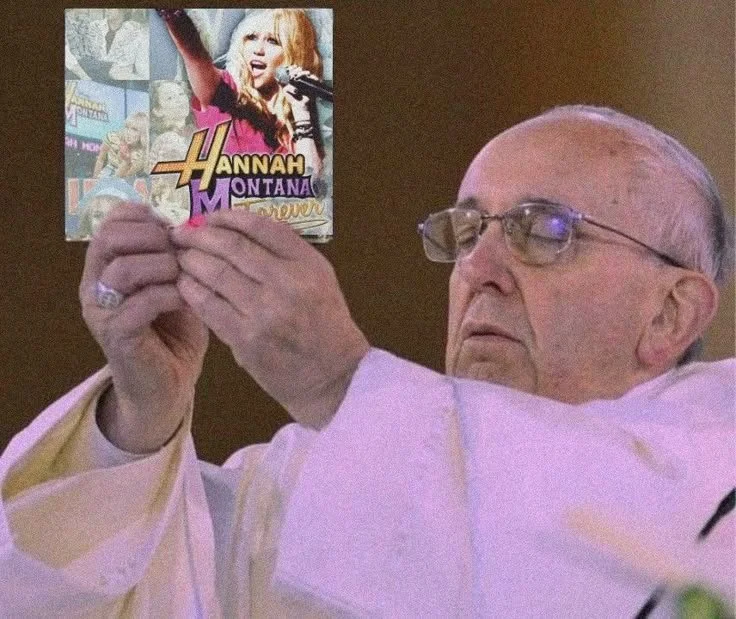
PHOTOGRAPHY BY PINTEREST